128 Million People Just Watched Salsa on Prime Time
On February 8, 2026, Bad Bunny took the stage at Levi's Stadium in Santa Clara, California, and did something no Super Bowl halftime performer had ever done before - he performed almost entirely in Spanish. For 13 minutes, in front of an average audience of 128.2 million viewers, Latin music and Latin dance owned the biggest stage in American entertainment.
And right there, under the lights, was salsa.
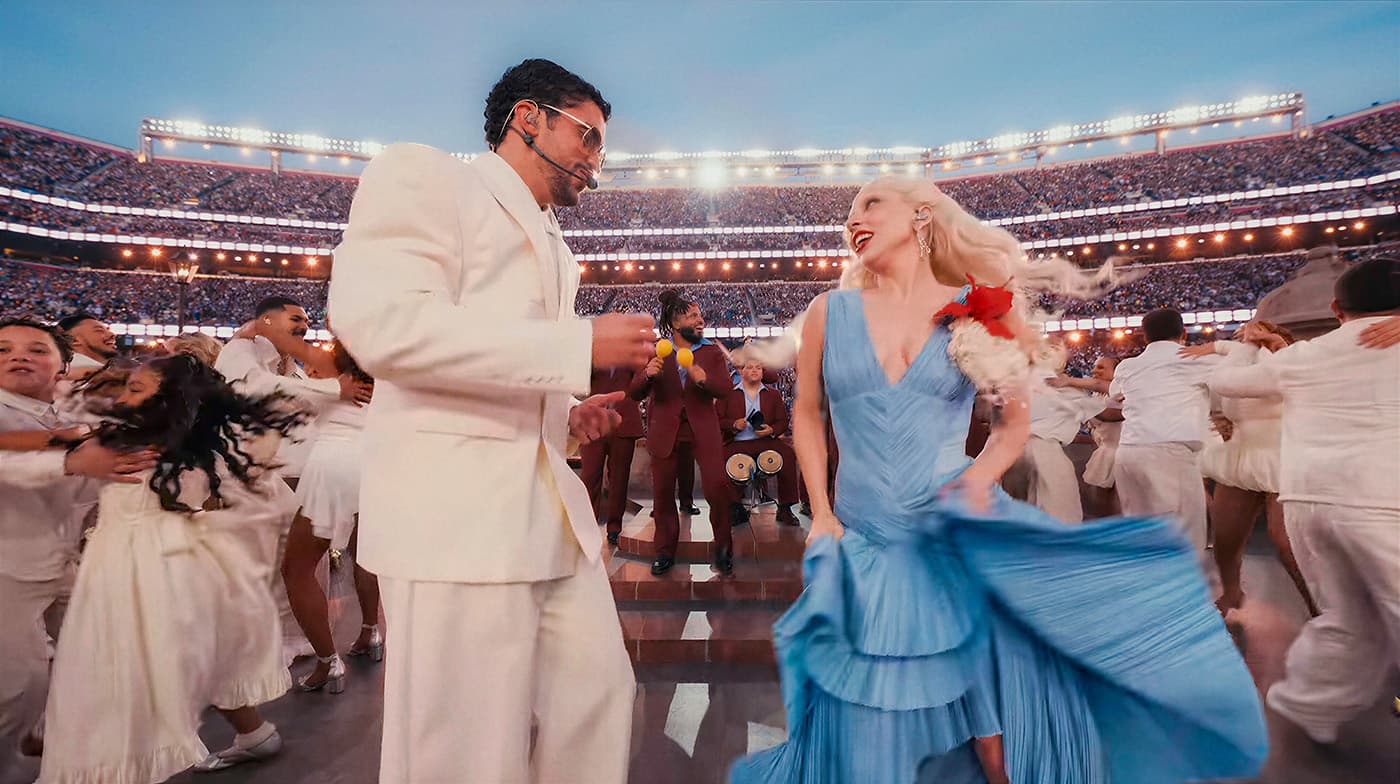
Not as background filler. Not as a token 30-second nod. Salsa was a featured element of the show - with real salsa dancers on stage, Lady Gaga joining Bad Bunny for a salsa-infused version of her hit "Die With a Smile," and choreography that drew from the social dance floors of the Caribbean. The moment peaked at 137.8 million viewers, the highest peak viewership in U.S. television history.
Globally, the performance reached 4.15 billion views across broadcasts, YouTube, and digital platforms within the first 24 hours.
The First Spanish-Language Super Bowl Halftime Show
Let that sink in. The Super Bowl has been around for 60 years. Artists like Michael Jackson, Beyonce, Prince, and Shakira have graced the halftime stage. Yet until Bad Bunny, no one had ever headlined the show performing primarily in a language other than English.
Bad Bunny - born Benito Antonio Martinez Ocasio in Vega Baja, Puerto Rico - is the most-streamed artist on the planet. His decision to perform in Spanish wasn't a compromise. It was a statement. In an era where Latino communities in the United States face increasing political tension, the show became what TIME Magazine called "an exuberant act of resistance."
The stage itself was designed as a Puerto Rican village, complete with storefronts, dancers dressed as mechanics, shopkeepers, and hairdressers - jobs held by many Latino immigrants across the U.S. The show opened with a wide shot of people working in sugar cane fields, a powerful symbol of Caribbean colonial history and the legacy of slavery in the region.
Why Salsa Matters More Than You Think
Salsa is more than a dance. It's a living, breathing expression of Afro-Caribbean identity, built on rhythms that trace back to Cuba, Puerto Rico, Colombia, and the broader African diaspora. It carries the DNA of Son Cubano, mambo, guaguanco, and jazz - genres born from resistance, migration, and cultural survival.
When salsa appeared on the Super Bowl stage, it wasn't just entertainment. It was validation. For decades, Latin social dances have thrived in underground clubs, community centers, and cultural festivals - massive in their own right, but largely invisible to mainstream American media. Bad Bunny's halftime show changed that in a single night.
Lady Gaga's salsa segment was especially significant. The scene recreated a Latin party - complete with couples dancing salsa, a kid falling asleep on plastic chairs while their parents danced the night away. If you grew up in a Latino household, you recognized that scene immediately. If you didn't, you just got your first taste of what makes Latin social culture so special.
A New Wave of Dancers Is Coming
Here's what happens every time Latin dance gets mainstream exposure: people want to learn.
After Super Bowl LX, Google searches for "salsa classes near me" surged. Dance studios across the U.S. and Europe reported spikes in inquiries. Social media flooded with clips of the halftime salsa segment, with millions of comments from people saying they wanted to try salsa for the first time.
This isn't surprising. The same pattern followed the success of Dirty Dancing, the Latin music boom of the late 1990s led by Ricky Martin and Marc Anthony, and the global explosion of reggaeton in the 2010s. Cultural moments create curiosity, and curiosity brings people to the dance floor.
What makes this moment different is scale. No previous Latin cultural moment had 128 million simultaneous viewers in the U.S. alone and billions more worldwide. The audience wasn't self-selected fans of Latin music - it was football fans, families, casual viewers. Many of them experienced salsa for the first time and felt something.
That feeling? It's the reason salsa has survived and thrived for over a century. The music moves you before you even understand why.
Embracing a New Culture Through Dance
One of the most beautiful things about Latin dance is that it doesn't require you to speak the language, come from a specific background, or have any prior experience. Salsa is a universal language - rhythm, connection, and joy transcend borders.
If you watched the Super Bowl halftime show and felt that pull - that curiosity, that energy - you're not alone. Millions of people around the world have discovered salsa exactly this way: through a song, a performance, a moment that made them think, I want to feel that too.
Learning salsa isn't just about steps and timing. It's about entering a community. It's about Friday nights spent on the dance floor with people from every background imaginable. It's about discovering that music and movement can connect you to a culture rich with history, passion, and warmth - even if it's completely new to you.
Bad Bunny showed 128 million people what Latino culture looks like when it's celebrated unapologetically. Now the question is: what will you do with that inspiration?
Ready to Start?
If Bad Bunny's Super Bowl performance made you curious about salsa, there's never been a better time to begin. At Salsa Rayo in Athens, we teach New York Style Salsa (On2) - the smooth, musical style born from the legendary NYC salsa scene - along with Bachata.
No experience needed. No partner needed. Just show up, and let the music do what it's been doing for over a century: bring people together.
Check our schedule and book your first class today. Your Super Bowl moment is waiting on the dance floor.