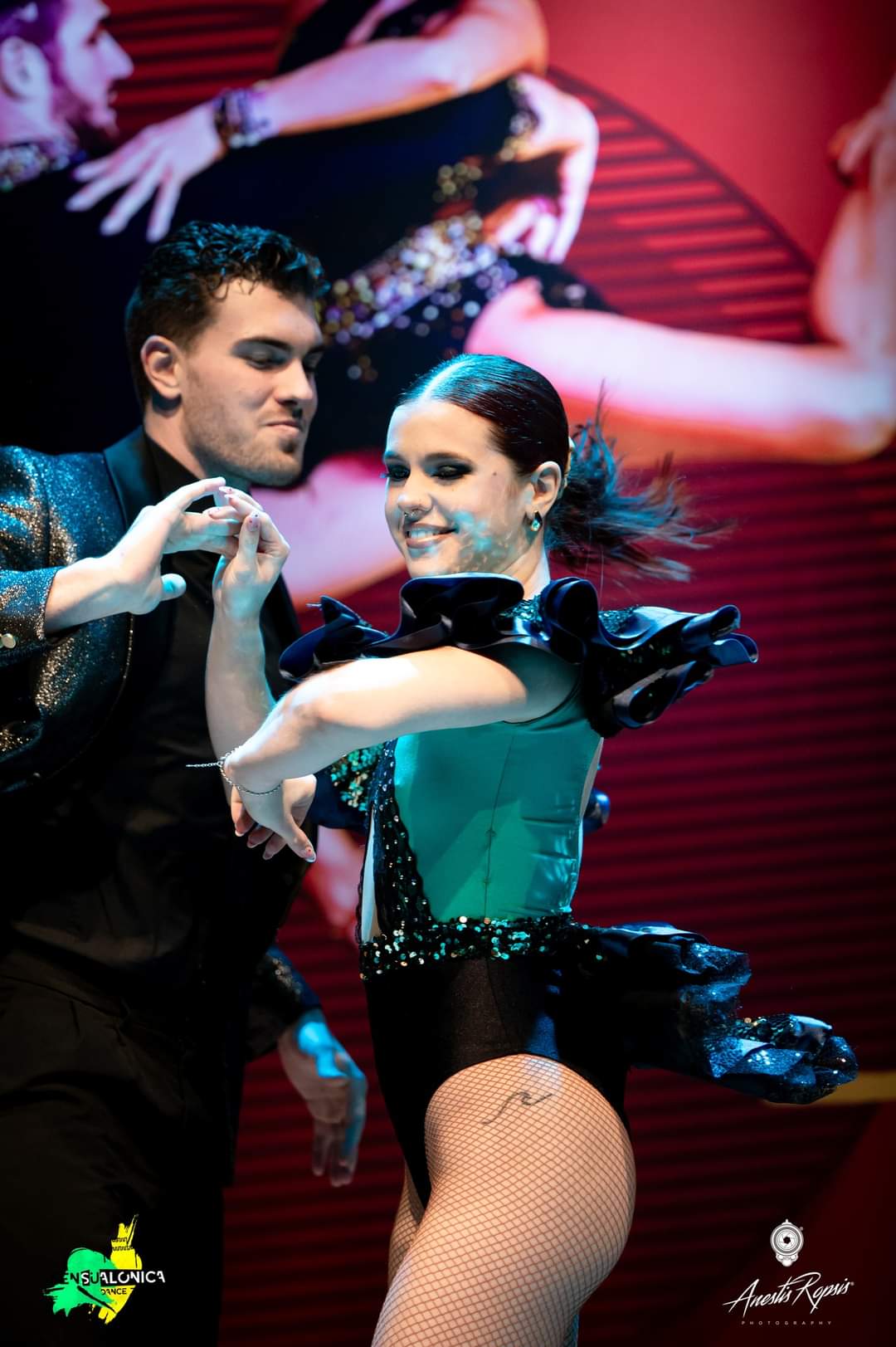
The health benefits of salsa dancing aren't just a nice idea - they're measurable, noticeable, and they show up faster than most people expect. Salsa as a physical activity combines aerobic exercise, muscle strengthening, flexibility, and coordination in a single movement that doesn't feel like working out - it feels like a night out.
Unlike the monotony of a gym, salsa keeps you active without the feeling that you "have to" exercise. That's not marketing - it's the reason so many people start for the dancing and stay for the results in their body, brain, and mood.
Cardiovascular health: salsa as aerobic exercise
Salsa is primarily an aerobic activity. One hour of dancing raises your heart rate to the moderate-intensity zone (120-150 bpm depending on intensity), which corresponds to the benefits of brisk walking or light jogging.
This means:
- Stronger heart and lungs. Regular aerobic exercise reduces the risk of cardiovascular disease, improves maximum oxygen uptake (VO2 max), and lowers blood pressure.
- Increased endurance. Over time, a salsa dancer can dance for hours at a social without tiring - a clear sign of cardiovascular improvement.
- Better blood circulation. The continuous leg movement, rhythmic body control, and directional changes promote blood flow to muscles and joints.
According to exercise physiology data, moderate-intensity dance like salsa corresponds to 4-6 METs (Metabolic Equivalent of Task), meaning energy expenditure is 4-6 times greater than at rest.
How many calories does salsa burn
One of the most common questions: how many calories does salsa burn? The answer depends on intensity, body weight, and duration, but we can give realistic estimates.
| Activity (1 hour) | Calories (~70kg person) |
|---|---|
| Salsa (class) | 300-400 |
| Salsa (social dancing, high intensity) | 400-600 |
| Running (light, 8 km/h) | 500-600 |
| Cycling (moderate) | 400-500 |
| Yoga | 200-300 |
| Walking (brisk) | 250-350 |
Salsa sits in a very competitive position compared to classic aerobic exercises. The difference is that at a social you can easily dance for 2-3 hours, while at the gym few people run for more than 45 minutes.
This gives salsa a huge advantage in total weekly energy expenditure - especially if you combine classes with social nights.
Health benefits of salsa: muscle strengthening and toning
Salsa isn't just aerobic. Every step, turn, and direction change activates muscle groups that many people don't use enough in their daily lives.
Legs and calves
Every salsa step starts from the floor. The constant weight transfer, cross-body steps, and turns work the quadriceps, glutes, hamstrings, and calves. After a few weeks of regular dancing, you'll feel your legs are stronger and more stable.
Core
Balance in salsa depends almost entirely on the core. Body movement, isolations, and partner connection require an active core at all times. This works like a plank in motion - without thinking about it.
Shoulders and back
The partner connection (frame) in salsa requires controlled tension in the shoulders and arms. This isn't about strength but continuous tone - something that improves posture and reduces back pain.
Flexibility and coordination
Salsa dramatically improves two abilities that gradually decline with age: flexibility and neuromuscular coordination.
Flexibility. Body movement, turns, and patterns require range of motion in the hips, torso, and shoulders. With frequent practice, the body gradually opens up without needing separate stretching sessions.
Coordination. Salsa demands simultaneous operation of feet, torso, arms, and rhythm. This creates new neural connections and improves reaction time. Studies show that partner dancing improves coordination more effectively than one-dimensional exercises like running or cycling.
For adults aged 35+, this coordination improvement is practically invaluable - it reduces fall risk and improves overall body awareness.
Salsa benefits for body and brain
The benefits of salsa don't stop at muscles. Partner dancing is one of the most cognitively demanding activities - and that's a good thing.
Memory and cognitive function
Learning figures, memorising sequences, and connecting movement to music engage both long-term and short-term memory. The process works as a form of cognitive training - every class is a puzzle you solve with your body.
Well-known studies, including the long-running research from the Albert Einstein College of Medicine, found that dancing reduced the risk of dementia by 76% - more than any other physical or cognitive activity examined.
Stress and anxiety reduction
Salsa combines three powerful anti-stress mechanisms:
- Physical exercise - releases endorphins
- Music - regulates mood and reduces cortisol
- Social interaction - activates oxytocin (the "bonding hormone")
This triple combination is rare in other forms of exercise. You don't just dance to burn calories - you dance and feel better immediately afterwards.
Confidence
One of the less mentioned but most significant benefits. Salsa pushes you out of your comfort zone - you dance with strangers, express yourself physically, and give and receive communication through the dance. This builds a confidence that transfers beyond the dance floor.
Salsa vs the gym: what you gain and what you miss
The comparison isn't "one or the other" - it's whether salsa can realistically cover part of your physical activity. The answer is clearly yes.
| Category | Salsa | Gym |
|---|---|---|
| Aerobic exercise | Very good | Very good |
| Muscle strengthening | Moderate (lower body, core) | High (targeted) |
| Flexibility | Good | Depends (yoga/stretching) |
| Coordination | Excellent | Low |
| Cognitive training | High | Low |
| Social interaction | High | Low |
| Mental wellbeing | Very high | Moderate |
| Cost/month | From €50 | €30-80 |
| Consistency motivation | Very high (community) | Moderate (45% quit within 6 months) |
Salsa doesn't replace weights if you want hypertrophy or upper body strength. But as an overall activity for health, movement, and mental wellbeing, it covers areas the gym simply doesn't reach.
How often should you dance to see results
The health benefits of salsa dancing start becoming noticeable even with 2 classes per week. After the first month, most students report:
- More energy in daily life
- Better sleep quality
- Reduced musculoskeletal pain (especially back and neck)
- Improved mood
With 3-4 classes per week - easily achievable with the 16 or 24 class packages - the change becomes more visible: greater endurance, noticeable lower body toning, better posture.
The World Health Organisation (WHO) recommends at least 150 minutes of moderate aerobic activity per week. Two salsa classes (2 x 60 minutes) already cover 80% of that recommendation. Add one social night and you comfortably exceed it.
Salsa as a lifestyle, not a fitness programme
What makes salsa unique isn't just the physical benefits. It's that you don't experience them as an obligation. Nobody says "I have to go to salsa today" in the same tone they say "I have to go to the gym." The community, the music, and the joy of dancing turn exercise into something you actually seek out.
This explains why dropout rates in dance are much lower than in gyms. Salsa creates a social network around the activity - friends, events, trips to festivals - that keeps you in a routine without pressure.
At Salsa Rayo in Agios Dimitrios, salsa classes run Monday through Thursday and include multiple levels - from beginners to intermediate. If you're looking for a way to move more, feel better, and meet people, salsa might be the most enjoyable "workout" you didn't know you needed.